
Key Takeaways
- Flexible layouts and biophilic design are central to contemporary office approaches.
- Smart technology integration boosts efficiency and enables rapidly adaptable spaces.
- Prioritizing employee well-being through ergonomic and wellness-driven design is now standard practice.
Table of Contents
- Flexible Layouts
- Biophilic Design
- Smart Technology Integration
- Ergonomic and Wellness-Focused Spaces
- Sustainable and Eco-Friendly Design
- Hospitality-Inspired Atmospheres
- Designing for Neurodiversity
- Conclusion
As the way we work continues to evolve, so too does the approach to designing office spaces. Thoughtful interior design is crucial for boosting productivity, enhancing well-being, and encouraging collaboration within the workplace. Adapting to these design evolutions can give companies a decisive edge in attracting and retaining top talent. Forward-thinking organizations, including innovators like Boulder CO real estate agents The Bernardi Group, are embracing these trends to create vibrant and functional environments that inspire their teams and clients alike. The modern workplace is far from one-size-fits-all. Rather, it reflects the shifting values of today’s workforce—flexibility, health, sustainability, and inclusivity are prioritized as never before. Integrating these trends into office interiors not only supports productivity but also demonstrates a company’s commitment to employee well-being and environmental responsibility. The spaces companies design today play a powerful role in shaping organizational culture and performance. Retaining team members is linked to how comfortable and inspired they feel in their workspace, making interior design a business essential rather than just an aesthetic choice.
Workplace design has become a dynamic field, where continual adaptation is key. Companies that stay at the forefront of these trends enable seamless collaboration, creativity, and motivation, thereby improving both the employee experience and the organization’s bottom line. Every design decision made—from the floor plan to lighting to sustainability—can influence employee satisfaction and business outcomes. In this article, we’ll explore the top trends in modern workplace interiors and discuss how companies can implement these changes to maximize their spaces’ potential and support a thriving workforce.
Flexible Layouts
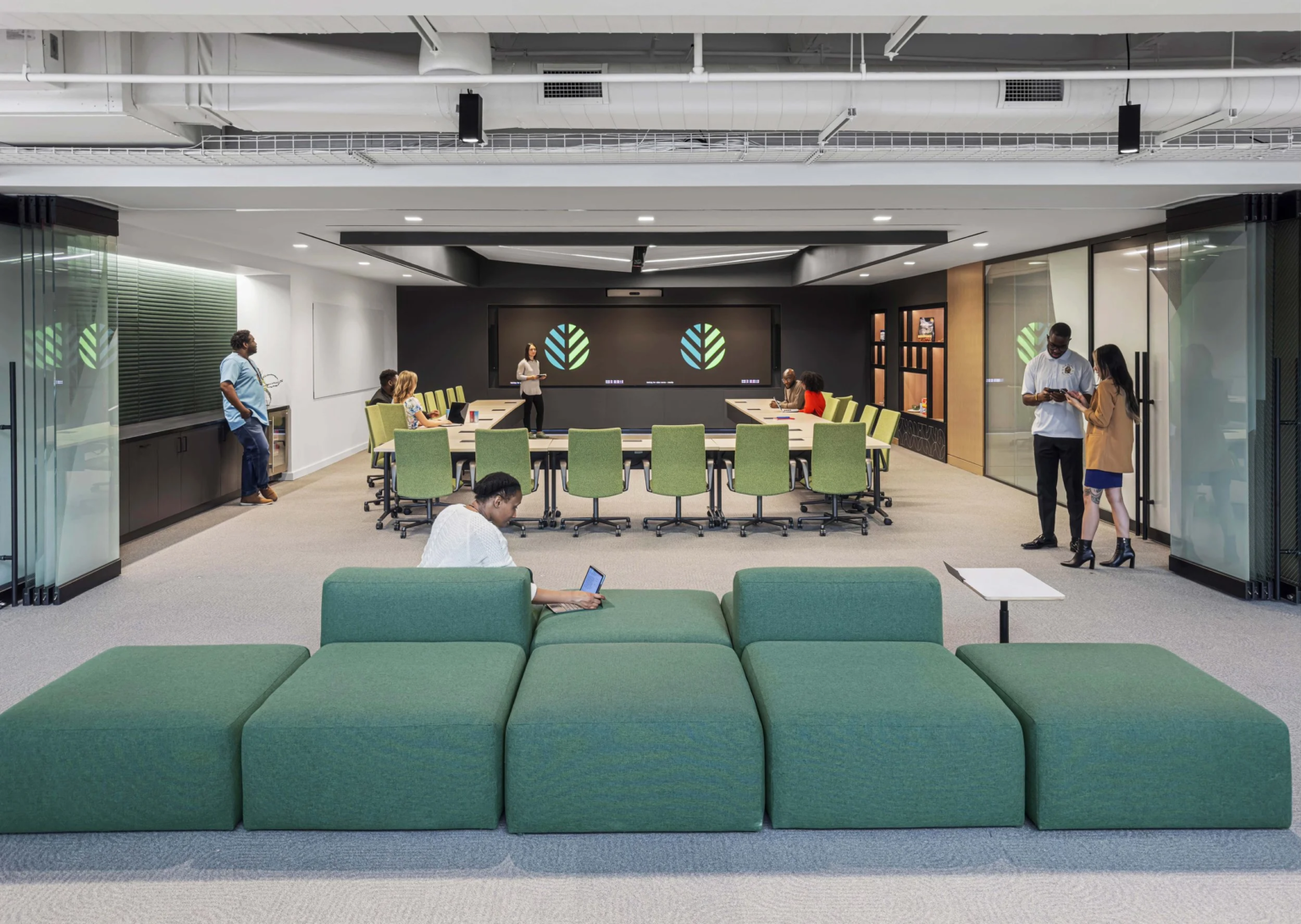
The rigid cubicle of the past has given way to adaptive layouts, featuring modular furniture and movable partitions. These innovations enable offices to quickly transform from quiet zones for focused work to open areas that foster teamwork. Flexible layouts support hybrid work arrangements, cater to varying work preferences, and make it easier to respond to changing team dynamics. According to Forbes, flexibility is seen as a vital element in future-proofing offices for productivity and collaboration.
Biophilic Design
Biophilic design—integrating nature and natural cues within interiors—continues to gain ground. Offices featuring living walls, greenery, water elements, and abundant natural light provide tangible benefits, including reduced stress and enhanced creativity. Utilizing organic materials like wood, cork, and stone fosters a grounding atmosphere. Studies have shown that biophilic elements can lead to a 15% increase in well-being and a 6% increase in productivity, aligning with broader wellness initiatives pursued by companies today.
Smart Technology Integration
Technology is seamlessly woven into the fabric of modern workplaces. Smart systems—powered by the Internet of Things (IoT)—automate lighting, climate control, and even occupancy levels in real time, providing a comfortable, efficient work environment. Advanced conferencing technologies, including AI-driven cameras and intelligent sound controls, have made hybrid and global collaboration easier than ever. These innovations are not just about convenience; they create workplaces that are responsive to employee preferences and help reduce operational costs through data-driven efficiencies.
Ergonomic and Wellness-Focused Spaces
Employee health and comfort are at the heart of today’s office design trends. Ergonomic seating, height-adjustable desks, and properly positioned monitors help reduce strain and injury. Wellness rooms, fitness centers, and dedicated relaxation zones provide space for essential breaks and stress relief. Research consistently shows that organizations that invest in wellness-focused environments experience higher morale, lower absenteeism, and greater job satisfaction among their teams.
Sustainable and Eco-Friendly Design
Eco-conscious design choices are not just trends but business imperatives. Offices are increasingly built with recycled and renewable materials, energy-efficient lighting and HVAC systems, and a focus on minimizing waste. Biophilic additions, such as plentiful natural light and indoor plants, boost both sustainability and employee health. Many companies now seek LEED (Leadership in Energy and Environmental Design) certification to demonstrate a lasting commitment to the environment and responsible business stewardship.
Hospitality-Inspired Atmospheres
Drawing inspiration from hotels and lounges, today’s offices emphasize comfort and social connection. Soft seating, thoughtfully designed communal spaces, and luxury-inspired touches make workspaces as inviting as they are functional. These elements transform the office into a “destination” that supports creativity, well-being, and organic conversations, moving beyond the utilitarian vibes of the past.
Designing for Neurodiversity
Inclusivity now means designing environments for everyone, regardless of sensory or cognitive differences. Features such as adjustable lighting, adaptable acoustics, quiet areas, and tactile materials make spaces more comfortable for neurodiverse employees. This approach not only ensures everyone is supported but also broadens the talent pool and enables teams to work at their best. As awareness grows, designing for neurodiversity is fast becoming a standard best practice in workplace design. Embracing these modern workplace interior trends allows organizations to create offices that are visually appealing, highly functional, and truly supportive of employees. With these forward-thinking approaches, companies position themselves for ongoing success in a shifting business landscape.
Conclusion
The evolution of the modern office from a rigid grid to a fluid, human-centric ecosystem marks a fundamental shift in how we value professional environments. As we have seen, the most successful workplace interiors are no longer measured by square footage but by their adaptability and impact on cognitive well-being. By integrating biophilic elements, modular layouts, and neuro-inclusive zones, organizations are doing more than just updating their decor; they are building a “destination” that actively fuels innovation and employee retention. In an era of hybrid work, the physical office must serve as a compelling anchor, a place where technology facilitates seamless collaboration and design prioritizes the holistic health of the workforce.
Ultimately, the future of work belongs to companies that view their interiors as a strategic asset. Features like AI-driven climate control and hospitality-inspired social hubs are not mere luxuries—they are the tools that create a responsive, high-energy culture. By committing to sustainable materials and ergonomic excellence, you ensure that your workspace remains resilient and relevant in a rapidly changing global market. When an office is designed to support the diverse needs of its people, it becomes a powerful catalyst for collective success, turning the daily grind into a source of inspiration and growth.
- What to Check Before Buying a Coastal Home in South Carolina
- A Practical 2026 Checklist for Buying Coastal Property on Florida’s Emerald Coast
- Managing Redness and Flare-ups With Expert Care
- What To Know About Mohs Surgery
- Expert Air Conditioning Services in Palatine, IL: Why Allied Air Conditioning & Heating Corporation Leads the Way