

Key Takeaways
- Heat pump water heaters offer up to 70% energy savings versus traditional models.
- Tankless water heaters supply hot water on demand, eliminating standby losses.
- Solar water heaters harness renewable energy and reduce reliance on fossil fuels.
- Smart controllers help homeowners optimize hot water use and save money.
With energy costs on the rise and environmental concerns at the forefront, homeowners are eager to explore ways to upgrade their water heating systems. Modern homes require solutions that balance efficiency, low utility bills, and sustainability. Advancements in water-heating technology now allow for greener, more cost-effective choices that meet these demands. If you are looking to enhance your home’s efficiency or need hot water heater repair services in Maui, understanding the latest options available is essential to making an informed decision.
Upgrading to an energy-efficient water heater reduces overall household energy consumption, lowers carbon emissions, and can significantly cut monthly expenses. Whether you are interested in reducing your home’s environmental impact or simply want to save on utility bills, there are innovative solutions suited for every need. As utility prices fluctuate, future-proofing your home with a reliable, efficient water-heating system has never been more important.
Energy-efficient water heating not only benefits individual homeowners but also supports global efforts to limit greenhouse gas emissions. These eco-friendly systems deliver reliable hot water while minimizing energy waste, helping you and your family lead a more sustainable lifestyle.
For those considering a system upgrade, it’s helpful to compare newer technologies to traditional models. This will ensure the solution you choose is tailored to both your household’s hot water needs and your financial goals. According to the U.S. Department of Energy, water heating is the second largest energy expense in most homes, underscoring the importance of prioritizing efficiency.
Heat Pump Water Heaters
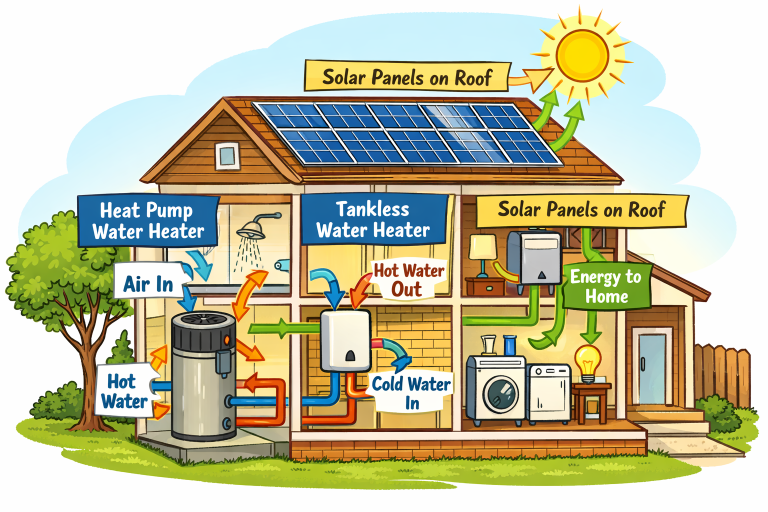
Heat pump water heaters (HPWHs) utilize electricity to move heat from the surrounding air into a water tank, rather than generating heat directly. This method is much more efficient than conventional electric models, leading to substantially lower energy consumption. HPWHs work particularly well in warm climates and areas with ample space for air circulation around the unit. Compared to traditional electric water heaters, HPWHs can be up to three times as efficient. According to Consumer Reports, these units can save an average household more than $300 a year in energy costs.
Tankless Water Heaters
Tankless water heaters, also known as on-demand heaters, heat water only when needed, rather than storing hot water for future use. This design completely eliminates the standby heat loss found in tank-style models. Tankless units use either electric elements or gas burners and are ideal for households with variable water demands. In addition to improved efficiency, tankless water heaters deliver a nearly endless supply of hot water, which means you do not have to worry about running out during back-to-back showers or laundry loads.
Solar Water Heating Systems
Solar water heating systems absorb sunlight using collectors, which then transfer the heat to water stored in a tank. This approach is an excellent option for homeowners with good solar exposure, as it allows them to harness renewable energy for daily water heating. Although installation costs are typically higher than with conventional methods, federal and state incentives can offset these initial expenses. The long-term benefit is significant reductions in utility bills and a much smaller environmental footprint.
Smart Water Heater Controllers
Smart water heater controllers add intelligence to your home’s water-heating system. These devices allow you to set and adjust heating times based on your household’s schedule and consumption patterns. For example, you can program them to heat water primarily during off-peak electricity rates, which further reduces operating costs. Some models also offer remote monitoring and maintenance alerts through mobile apps, helping you address issues before they grow into major problems. Studies have shown that integrating smart controls can achieve an additional 10-20% in energy savings over standard use.
Financial Incentives and Rebates
Governments and utility providers frequently offer financial incentives to help offset the higher upfront costs of energy-efficient water heating systems. These include rebates, tax credits, and low-interest loans designed to make upgrades more accessible to homeowners. For example, residents in San Francisco can receive up to $1,200 in credits when switching to an efficient heat pump. Similar programs exist in many regions; check with your local utility provider or city government for available options.
Conclusion
Choosing an energy-efficient water heating solution is a smart investment for modern homeowners. Upgrades such as heat pump water heaters, tankless systems, and solar-powered models offer a reliable supply of hot water while reducing both energy costs and environmental impact. With smart controllers and financial incentives, it is easier than ever to enjoy the benefits of advanced, sustainable water heating. As you explore your options, be sure to consult local experts and take advantage of available rebates to maximize your savings and efficiency.
- What to Check Before Buying a Coastal Home in South Carolina
- A Practical 2026 Checklist for Buying Coastal Property on Florida’s Emerald Coast
- Managing Redness and Flare-ups With Expert Care
- What To Know About Mohs Surgery
- Expert Air Conditioning Services in Palatine, IL: Why Allied Air Conditioning & Heating Corporation Leads the Way